
In this post, you will embark on a comprehensive journey into the mist-laden, emerald heart of Madagascar. We’ll explore Ranomafana National Park, a UNESCO World Heritage Site and biodiversity jewel. You’ll discover its steaming rainforests, meet its iconic and bizarre wildlife—from golden bamboo lemurs to technicolor frogs—delve into its vital conservation story, and gain practical insights for planning your own adventure into this living laboratory of evolution.
Nestled in the rugged, cloud-fringed highlands of southeastern Madagascar, Ranomafana National Park is more than a destination; it is an immersion into a primordial world. 🌿 Established in 1991, spurred by the groundbreaking discovery of the critically endangered golden bamboo lemur, this 416 square kilometer protected area has become a cornerstone of conservation and a beacon for ecotourism. Its name, translating poetically to “hot water” in Malagasy, hints at the region’s thermal springs, but the park’s true energy flows from its astonishing density of life. As part of the Rainforests of the Atsinanana UNESCO World Heritage series, Ranomafana is recognized as a critical sanctuary for species that tell an epic story of isolation, adaptation, and survival.
The Lush Tapestry of the Rainforest 🌧️
The first encounter with Ranomafana is an assault on the senses in the most beautiful way. The air is cool, heavy with moisture, and fragrant with the scent of damp earth and blooming orchids. A perpetual mist weaves through the canopy, softening the sunlight into a diffuse, green-gold glow that dances on giant fronds of tree ferns and moss-draped lianas. The terrain is a series of steep, rolling hills carved by clear, rushing streams and waterfalls, with a network of well-maintained trails guiding visitors through the vertical landscape.
This montane rainforest ecosystem is exceptionally rich due to its altitude range (between 800 and 1,200 meters) and high annual rainfall. The forest structure is complex, with multiple canopy layers creating diverse niches for wildlife. From the low-lying herbaceous plants and pandanus palms to the emergent trees towering above, every level thrives with endemic species. This lush, seemingly impenetrable green is the stage upon which one of Earth’s most unique wildlife dramas unfolds.
A Carnival of Unique Wildlife 🐒
Ranomafana’s fame rests on its incredible biodiversity, with an overwhelming majority of its flora and fauna found nowhere else on the planet.
The Lemurs: Stars of the Canopy
The park is a premier location for lemur viewing, home to 12 species. Guided walks, especially in the early morning, offer unforgettable encounters:
- The Golden Bamboo Lemur (Prolemur simus): The park’s flagship species. This cat-sized lemur is a marvel of adaptation, consuming daily portions of giant bamboo shoots containing cyanide levels that would be fatal to other animals.
- The Greater Bamboo Lemur (Prolemur simus): Larger and shaggier, often seen in family groups cracking open tough bamboo culms with powerful jaws.
- The Milne-Edwards’ Sifaka (Prolemur edwardsi): A majestic, mostly black sifaka known for its spectacular vertical leaps and bounds across open spaces.
- The Red-bellied Lemur (Eulemur rubriventer): Notable for the males’ striking white “tear-drop” markings and the species’ strong pair bonds.
- The Eastern Woolly Lemur (Avahi laniger): A nocturnal, fluffy-furred species that is remarkably placid and often observed during night walks.
Beyond the Lemurs: A Microcosm of Marvels 🐸
The wonder extends far beyond primates. Ranomafana is a haven for herpetologists and birdwatchers, a true ark for micro-endemics.
- Reptiles & Amphibians: The park boasts over 90 species of frogs and numerous chameleons and geckos. Highlights include:
- The stunning Painted Mantella Frog, a tiny, poisonous jewel in orange and black.
- The extraordinary Leaf-tailed Gecko (Uroplatus spp.), a master of camouflage that disappears perfectly against tree bark.
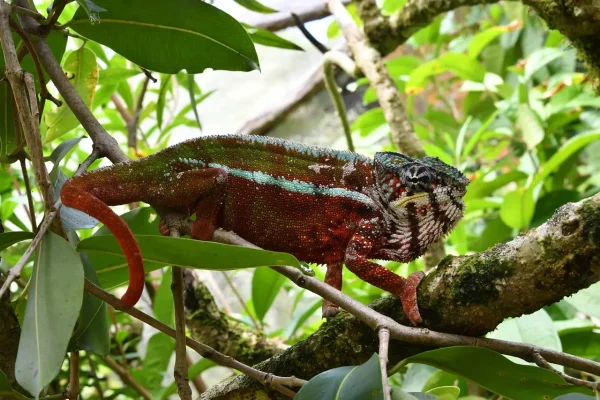
- A myriad of chameleons, from the tiny Brookesia minima to the larger Furcifer species, shifting colors not for camouflage but for communication and temperature regulation.
- Birdlife: Over 115 bird species inhabit the park, nearly 70% of which are endemic. Key sightings include the Rufous-headed Ground Roller, the Velvet Asity, and the Pitta-like Ground Roller—all elusive, ground-dwelling birds that are highlights for any birder.
| Category | Key Species & Highlights | Best Time/Place to See |
|---|---|---|
| Iconic Lemurs 🐒 | Golden Bamboo Lemur, Greater Bamboo Lemur, Milne-Edwards’ Sifaka | Early morning, near bamboo thickets (Vohiparara area for golden) |
| Nocturnal Life | Eastern Woolly Lemur, Mouse Lemurs, Sportive Lemurs, Leaf-tailed Gecko | Guided night walks along the main road or park periphery |
| Birds | Rufous-headed Ground Roller, Velvet Asity, Madagascar Blue Pigeon | With a specialist bird guide, early morning in primary forest |
| Reptiles & Frogs 🐸 | Painted Mantella, Various Chameleons, Boophis tree frogs | Rainy season (Nov-Apr) for frogs; night walks for geckos |
| Flora 🌿 | Orchids, Tree Ferns, Medicinal Plants, Bamboo Species | Throughout trails; orchids peak in the Malagasy summer |
The Human Dimension: Conservation & Community 👥
Ranomafana’s story is not just ecological but profoundly human. Its creation required the delicate relocation of local villages, and its ongoing success is deeply tied to community involvement. The MICET/ICT (Institute for the Conservation of Tropical Environments) research station, located at the park entrance, symbolizes this synergy. 🔬 For decades, it has hosted international scientists and students, making Ranomafana one of the most intensively studied tropical forests in the world, a true living laboratory.
This model of integrated conservation-development ensures that local communities see tangible benefits from the park’s existence. Former hunters are employed as expert guides, trackers, and park rangers. Nearby villages benefit from tourism revenue through homestays, craft sales, and cultural performances. This partnership is crucial in mitigating threats like slash-and-burn agriculture (tavy) and illegal logging, creating a shared stake in the forest’s future. It is a powerful example of conservation that works with people, not against them.
Planning Your Visit: A Practical Guide
To fully appreciate Ranomafana, planning is key.
- When to Go: The park is accessible year-round. The dry season (April to October) offers cooler temperatures, less leech activity, and easier hiking. The wet season (November to March) is hotter, rainier, and muddier, but the forest is at its most vibrant, with lush foliage, active frogs, and many birds nesting.
- Guides are Mandatory: Hiring a local guide from the park office is non-negotiable and invaluable. Their expert eyes will spot wildlife you would never see, and they share deep knowledge of the ecosystem and cultural history. Specialized guides for birds or photography can be arranged.
- Choose Your Trail: Trails range from easy 2-hour loops (e.g., Varijatsy) to strenuous 6-hour hikes (e.g., Sahamalaotra). Discuss your fitness and interests with your guide.
- Essential Gear: Pack sturdy, waterproof hiking shoes, leech socks (especially in wet season), quality rain gear, layered clothing, binoculars, a headlamp for night walks, and plenty of memory cards for your camera.
Conclusion: A Living Legacy
Ranomafana National Park is more than a checklist of rare species. It is an experience that lingers—the sound of the indri’s call echoing through valleys, the sight of a sifaka soaring, the chill of the mist on your skin. It stands as a powerful testament to what dedicated, community-led 👥 conservation can achieve: a thriving, breathing ark where ancient lineages persist. To walk its paths is to witness the incredible result of Madagascar’s 80 million years of isolation and to understand the urgent, ongoing work required to protect such a fragile and irreplaceable piece of our planet’s heritage. It is, in every sense, a journey back to a greener, wilder world, a profound reminder of nature’s resilience and wonder. 🌿